PROJECTS
June, 2025
Drawing Room Confessions, 2011 – ongoing
Drawing Room Confessions is a collection of printed books inspired by a social game, played at the end of the nineteenth century, consisting of a fixed questionnaire designed to reveal the tastes, values, aspirations and personalities of the players. Each book in the series is dedicated to an artist who has been invited to play the game of conversation with a group of interlocutors drawn from a wide range of fields. The rules of the game are set, only the players change, each round contributing a different aspect to this portrait of the artist at a certain moment in time:
- The Egoist: a dialogue with someone selected by the artist.
- The Blind Man: a written exchange with a person whose identity is concealed from the artist until publication.
- Two to Tango: a discussion of the creative process between the artist and a partner chosen by the editors.
- Double Dealer: a conversation arising once in a while from unforeseen synchronicities during the making of the book; usually with a friend or colleague of the artist.
Two solo exercises complete the likeness:
- For the time being: a listing of the events — personal, cultural and historical — that have defined the artist’s life and thought.
- La Madeleine, a set of questions, based on the historical game of Drawing Room Confessions, to be answered spontaneously. The answers to two of these questions determine the design of the book’s cover.
Some issues include an Ekphrasis, from the Greek, meaning a translation of a visual representation into words, in this case one of the artist’s own works of art.
DRC Radio is a recorded re-enactment of one conversation in selected issues. The actors use the books as script and read unrehearsed.
Made of words and exchanges, rather than images, Drawing Room Confessions is open to diverse voices, practices, and realities, offering an in-depth and singular approach to each artist.
Zarigüeya/Alabado Contemporáneo
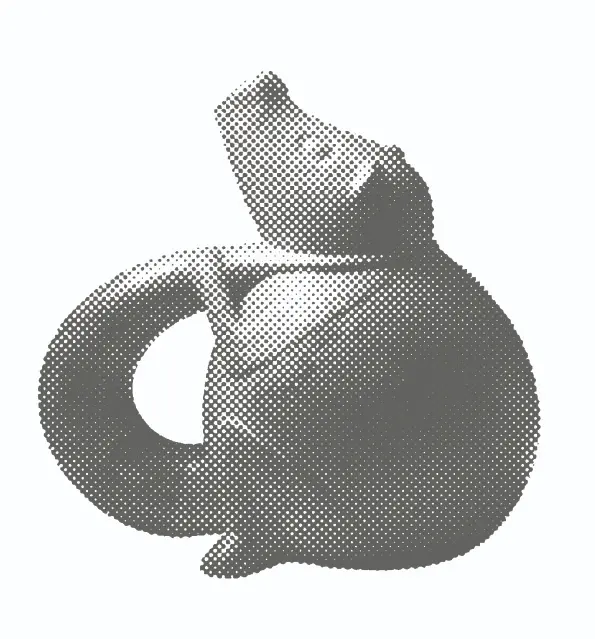
How can contemporary art engage a collection of pre-columbian artefacts? And what is at stake in such a dialogue? Zarigüeya/Alabado Contemporáneo, an experimental curatorial project started in 2016 by Manuela Ribadeneira, Manuela Moscoso, and Pablo Lafuente in collaboration with the Museo de Arte Precolombino Casa del Alabado in Quito, probes these questions. In Tiempo de Zarigüeyas (Season of the possums), each of the six artists (Asier Mensizabal, Osías Yanov, Adrián Balseca, Caroline Achaintre, Tamar Guimarães, Gonzalo Vargas M.) reconsiders their creative process. The three curators reflect on the impact of the initiative, and art critic and curator Ana Rosa Valdez places the project in the larger context of contemporary Latin American art. Edited by Sarah Demeuse, the publication also features ample photographic documentation of the six iterations.